
Blog
Ganga Issue Today: Proven Facts on Pollution & Studies

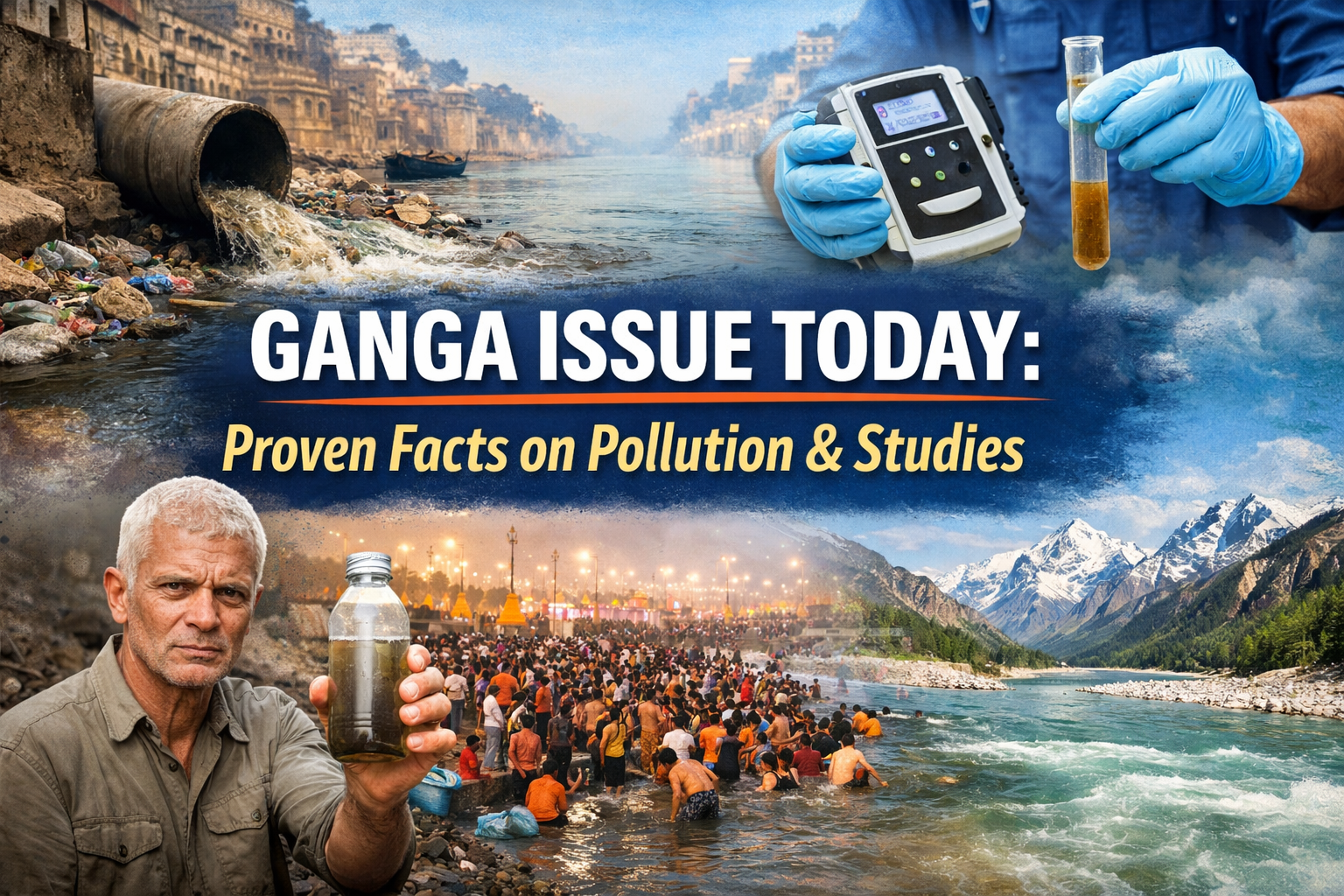
Ganga Issue Today: Proven Facts on Pollution & Studies
The Ganga River is the lifeline of India. Millions depend on it every day for drinking water, farming, religious rituals, and daily life. But today, the Ganga issue has become a serious national concern because of rising pollution, sewage discharge, and harmful bacteria.
Recent studies, official reports, and even independent tests by experts like Jeremy Wade show that many parts of the river are still unsafe.
This guide explains the real facts, latest data, and what every Indian citizen should know and do.
What Is the Ganga Issue Today?
The “Ganga issue” refers to the pollution and declining water quality of the river.
It mainly includes:
- Untreated sewage entering the river
- High levels of harmful bacteria
- Industrial waste
- Solid waste and plastic
- Pollution during large religious events
Even after years of cleaning efforts, several stretches of the river remain polluted.
Latest Data on Ganga Pollution
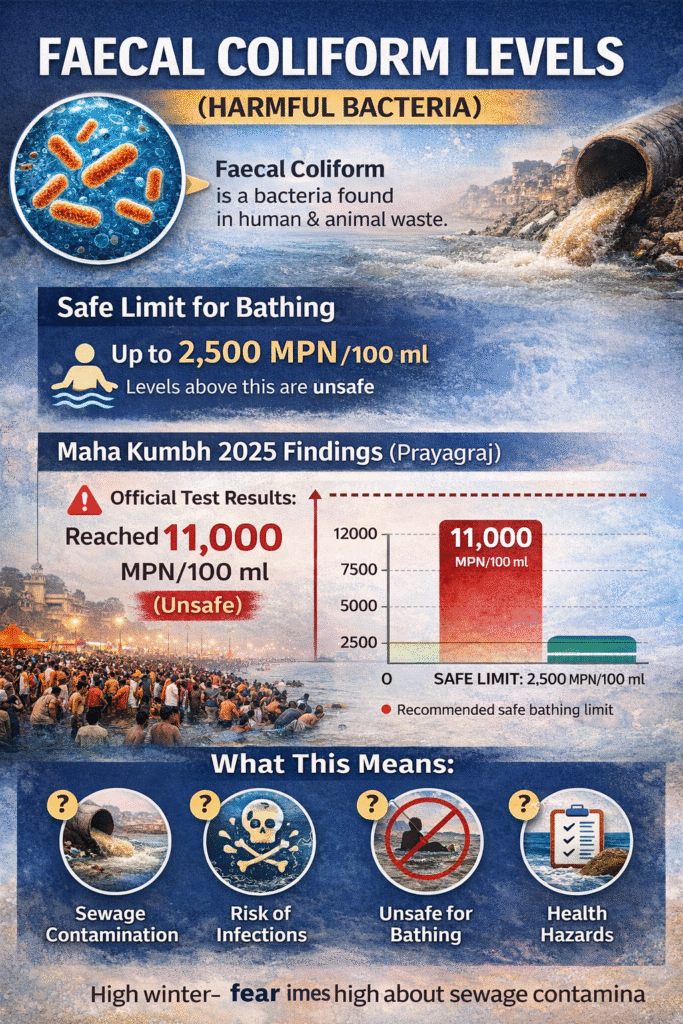
1. Faecal Coliform Levels (Harmful Bacteria)
Faecal coliform is a bacteria found in human and animal waste.
Safe limit for bathing: Up to 2,500 MPN/100 ml
During Maha Kumbh 2025 in Prayagraj, official tests showed:
👉 Levels reached 11,000 MPN/100 ml in some places.
This means the water contained high amounts of sewage contamination.
2. Biochemical Oxygen Demand (BOD)
BOD shows how polluted water is with organic waste.
Safe limit: Below 3 mg/L
In many urban areas, BOD is higher than safe levels, showing heavy pollution.
3. Dissolved Oxygen (DO)
DO is oxygen in water needed for fish and plants.
Healthy level: Above 5 mg/L
Low DO means the river is struggling to support life.
Why Is the Ganga Still Polluted?
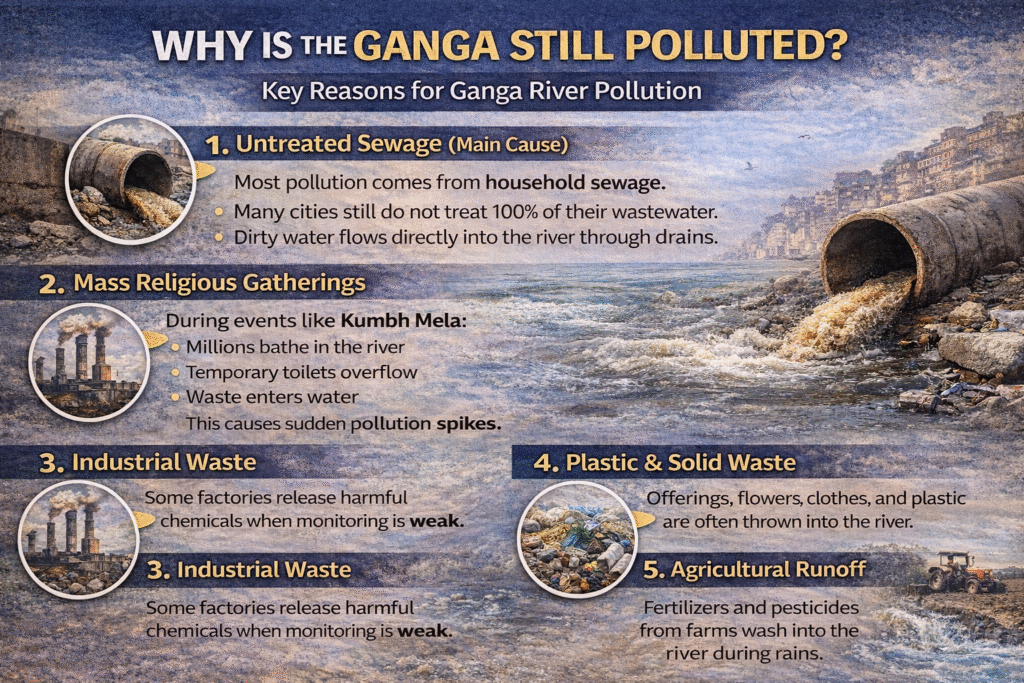
1. Untreated Sewage (Main Cause)
Most pollution comes from household sewage.
Many cities still do not treat 100% of their wastewater.
Dirty water flows directly into the river through drains.
2. Mass Religious Gatherings
During events like Kumbh Mela:
- Millions bathe in the river
- Temporary toilets overflow
- Waste enters water
This causes sudden pollution spikes.
3. Industrial Waste
Some factories release harmful chemicals when monitoring is weak.
4. Plastic and Solid Waste
Offerings, flowers, clothes, and plastic are often thrown into the river.
5. Agricultural Runoff
Fertilizers and pesticides from farms wash into the river during rains.
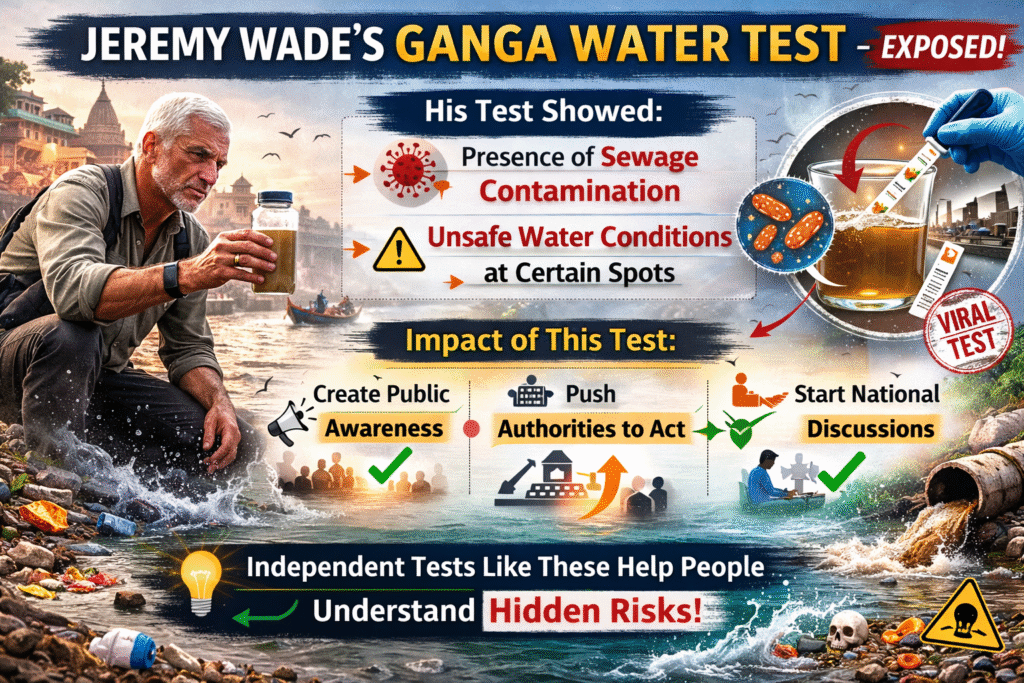
Jeremy Wade’s Test and Why It Matters
British biologist Jeremy Wade conducted a simple water test that went viral.
His test showed:
- Presence of sewage contamination
- Unsafe water conditions at certain spots
Although it was not a laboratory test, it helped:
✔ Create public awareness
✔ Push authorities to act
✔ Start national discussions
Independent tests like these help people understand hidden risks.
Important Water Quality Standards (Simple Table)
| Indicator | Safe Limit | Meaning |
|---|---|---|
| Faecal Coliform | ≤ 2,500 MPN | Shows sewage pollution |
| BOD | ≤ 3 mg/L | Indicates organic waste |
| Dissolved Oxygen | ≥ 5 mg/L | Supports aquatic life |
| pH | 6.5–8.5 | Shows acidity/alkalinity |
If values cross these limits, water becomes unsafe.
Step-by-Step: How to Check If Ganga Water Is Safe
Step 1: Check Official Data
Visit CPCB or Namami Gange websites for monitoring reports.
Step 2: Follow Local Advisories
Municipal bodies often release warnings.
Step 3: Observe the Area
Avoid places where drains join the river.
Step 4: Avoid Drinking River Water Directly
Never drink untreated river water.
Step 5: Report Pollution
If you see waste dumping, report to local authorities.
Mini Checklist for Citizens
Before bathing or using river water, ask:
✔ Is there an official safety notice?
✔ Is sewage visible nearby?
✔ Has it rained heavily recently?
✔ Do I have clean alternative water?
If most answers are “No”, avoid contact.
Pro Tips for Protecting Your Family
💡 Always boil drinking water if source is uncertain
💡 Use certified water purifiers
💡 Store water in clean containers
💡 Clean home tanks regularly
💡 Teach children about water safety
Small habits prevent big health problems.
How Citizens Can Help Clean the Ganga
You don’t need to be a politician to make a difference.
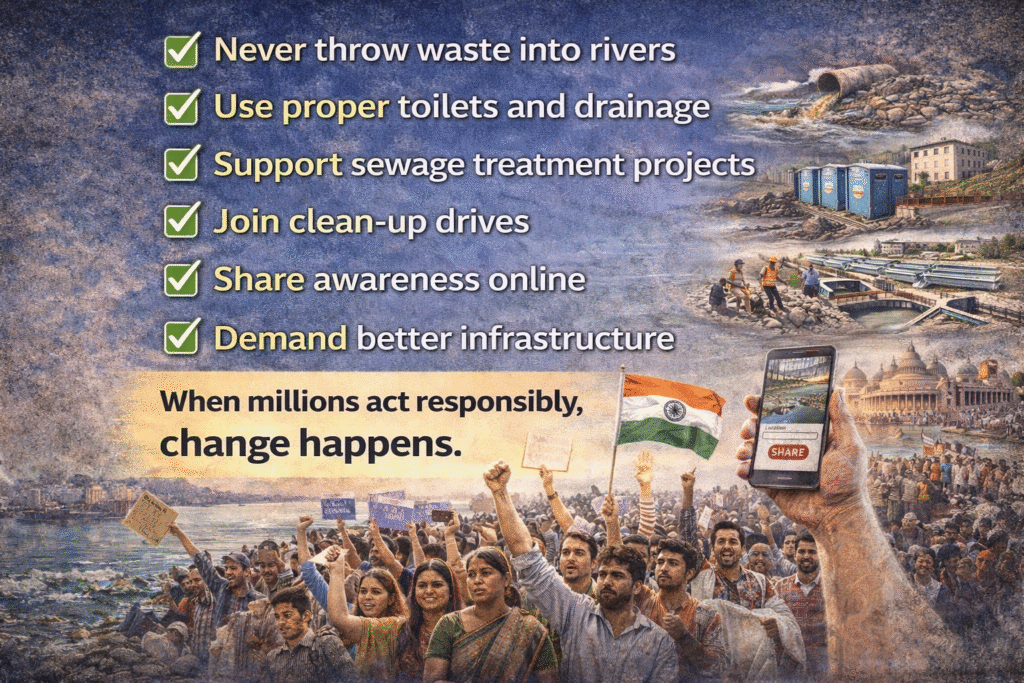
You can:
✅ Never throw waste into rivers
✅ Use proper toilets and drainage
✅ Support sewage treatment projects
✅ Join clean-up drives
✅ Share awareness online
✅ Demand better infrastructure
When millions act responsibly, change happens.
Conclusion: The Future of the Ganga Is in Our Hands
The Ganga is not just a river. It is India’s cultural, spiritual, and economic backbone.
Yes, pollution is still a serious problem.
Yes, data shows worrying signs.
But improvement is possible — if citizens, governments, and industries work together.
Every responsible action counts.
Protect Your Home Water – Shop Now
Even if river water is polluted, you can still protect your family at home.
Safe drinking water is your first line of defense.
👉 Shop reliable household water solutions at Aquasave:
🔗 https://aquasave.in/product-category/aqua-save-ro/
✔ High-quality RO systems
✔ Water-saving technology
✔ Trusted purification solutions
Shop Now and secure your family’s health.
Frequently Asked Questions (FAQ)
1. Is it safe to bathe in the Ganga today?
It depends on the location. Check official monitoring reports before bathing.
2. What does high faecal coliform mean?
It means sewage contamination and higher risk of infections.
3. Did Jeremy Wade prove the Ganga is dirty?
His test showed contamination at certain spots and raised awareness.
4. Can Ganga be cleaned completely?
Yes, with proper sewage treatment, public support, and strong enforcement.
5. How can I stay safe daily?
Use purified water, follow advisories, and avoid polluted areas.