
Blog
CLEAR WATER IS NOT CLEAN WATER

CLEAR WATER IS NOT CLEAN WATER
The Hidden Crisis — And How Every Home Can Be Part of the Solution
A AquaSave Public Awareness Report | March 2026
💧 Did You Know?
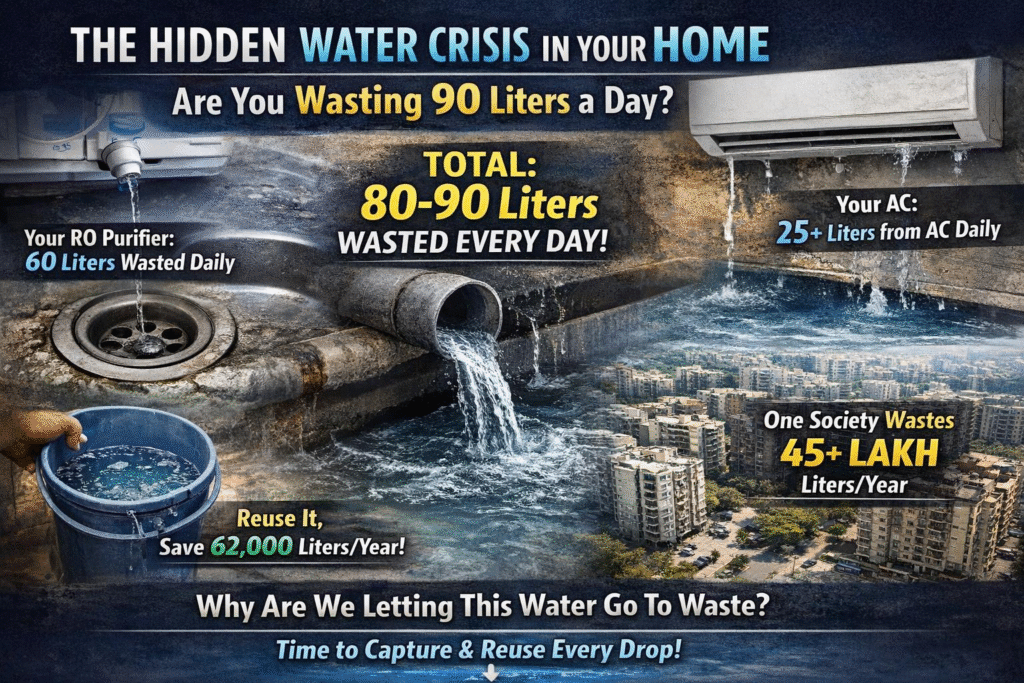
Every time your RO water purifier fills a glass of clean water, it silently drains away 2 to 3 glasses of rejected water — straight into the drain.
That rejected water is not drinking water. But it is not useless either. And right now, it is flowing unchecked into the ground, mixing with contaminants, and contributing to the very water crisis that affects millions of Indians every day.
AquaSave was built to stop that waste — and to give every household a simple, practical way to protect water before it is lost.
- The Illusion of Clarity
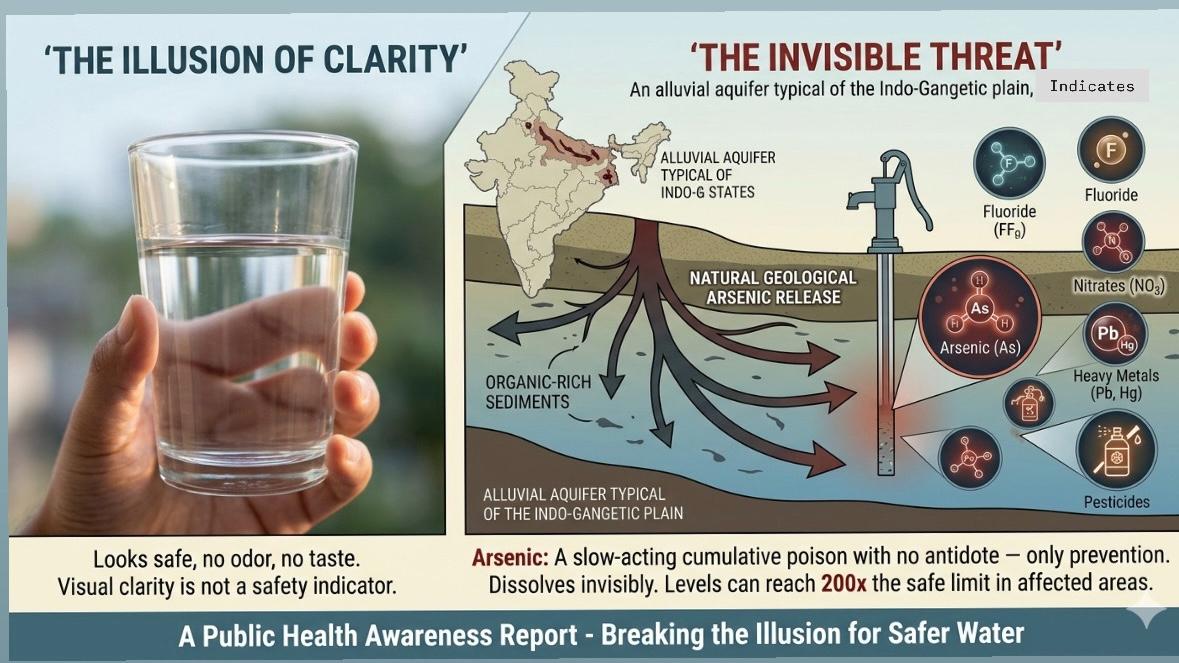
When you fill a glass of water and hold it to the light, your instinct says: if it looks clear, it is safe.
For generations, that felt like common sense. But today, it is one of the most dangerous misconceptions in public health.
The chemicals that harm us most in drinking water are completely invisible.
• Arsenic has no colour
• Fluoride has no smell
• Nitrates have no taste
They dissolve silently into groundwater — and a person drinking contaminated water every day may feel perfectly fine for years before serious disease appears.
In India, this is not a rare or faraway problem.
It is happening in millions of homes, in hundreds of districts, right now.
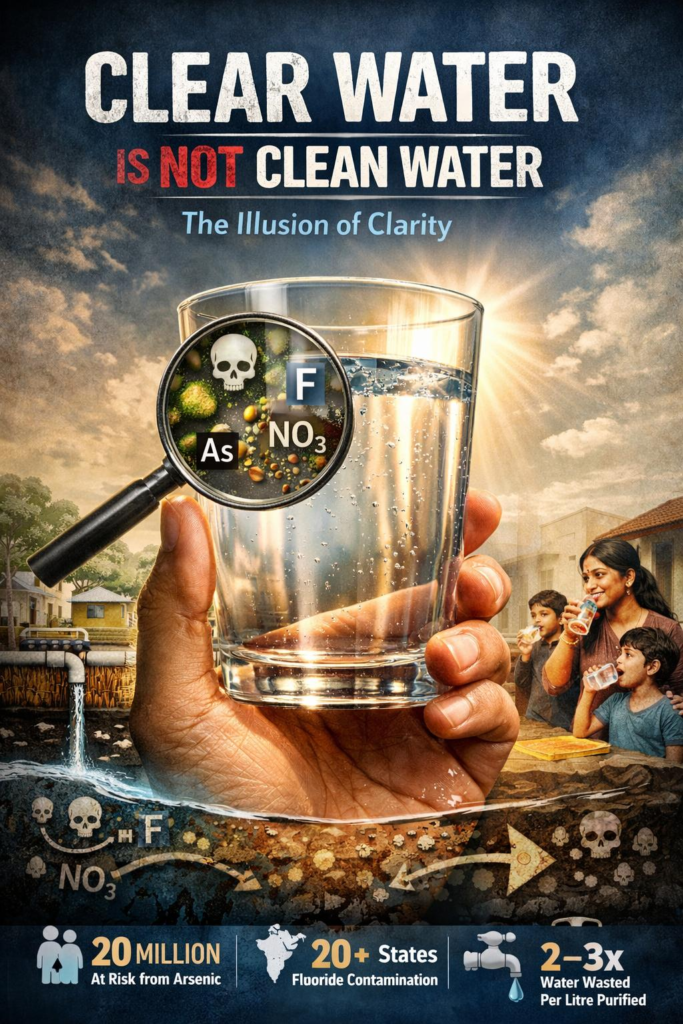
👨👩👧👦 20 Million+ Indians at Risk from Arsenic in Groundwater
🗺️ 20+ States with Dangerous Fluoride Contamination
💧 2–3x Water Wasted per Litre Purified by a Standard RO
- Arsenic in India’s Groundwater
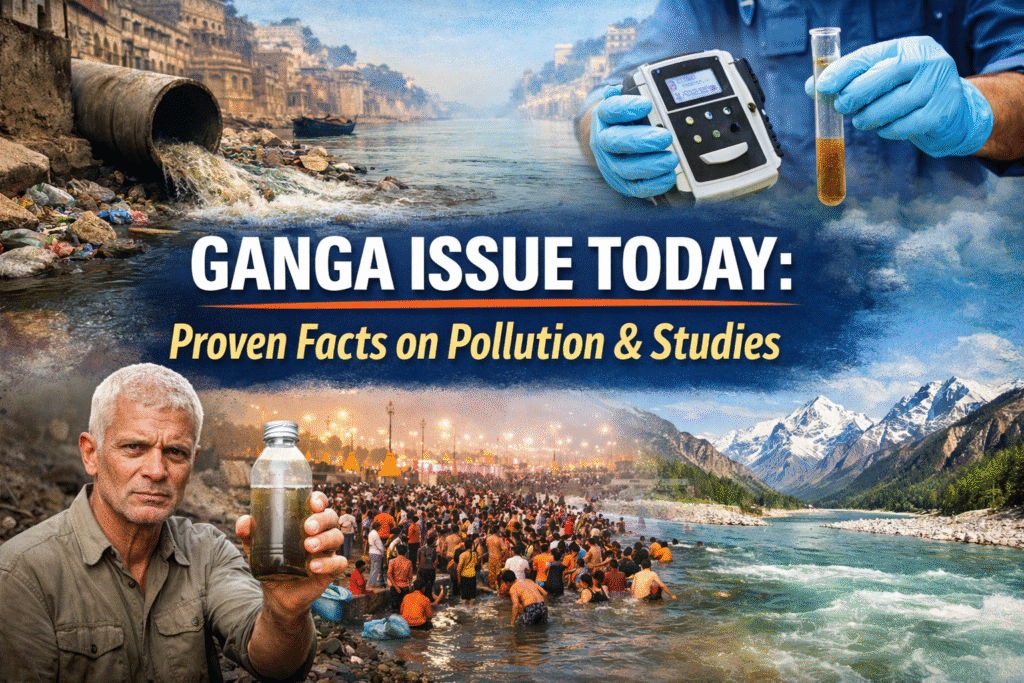
Arsenic is a naturally occurring element found in rock and sediment. In the right geological conditions — like the alluvial plains of the Ganga and Brahmaputra river systems — it dissolves into groundwater at concentrations that are seriously harmful to health.
The World Health Organization (WHO) safe limit for arsenic in drinking water is:
10 micrograms per litre
But in severely affected districts of West Bengal, Bihar, and Uttar Pradesh, measured levels regularly reach:
200 to 2,000 micrograms per litre
That is:
Up to 200 times the safe limit.
And the water still looks perfectly clear.
⚠️ Why India Is So Vulnerable
The Indo-Gangetic plain — where hundreds of millions of people live — sits on young sediment naturally rich in arsenic-bearing minerals.
The Green Revolution drove a massive expansion of deep tubewells to irrigate crops, tapping directly into the most contaminated aquifer layers.
Today:
Over 80% of rural India depends on groundwater for drinking.
Because contaminated water looks, smells, and tastes exactly like safe water, most affected communities have no idea.

Most Affected States in India
West Bengal — Most severely affected nationwide
Bihar — High rural groundwater dependence
Uttar Pradesh — Eastern districts heavily impacted
Jharkhand — Mining activity increases contamination risk
Assam — River sediment contamination zones
Manipur — Emerging contamination monitoring areas
- What Arsenic Does to the Body
Arsenic does not make you sick overnight.
It accumulates slowly in your organs over years of daily exposure. By the time visible symptoms appear, the damage is often already serious and irreversible.
Early Signs (5–10 Years)
• Dark, patchy pigmentation on skin
• Hardening of skin on palms and soles
• Tingling and numbness in hands and feet
Advanced Disease (10–20+ Years)
• Cancers of bladder, skin, lung, kidney, and liver
• Severe vascular disease — in some cases, gangrene
• Liver and kidney failure
• Neurological damage
🧬 Confirmed Carcinogen
The International Agency for Research on Cancer (IARC) classifies inorganic arsenic as a:
Group 1 carcinogen — the highest level of certainty.
This means arsenic definitively causes cancer in humans.
Long-term exposure is also linked to:
• Type 2 diabetes
• Cardiovascular disease
• Reduced IQ in children
• Permanent neurological harm
- Other Invisible Chemical Threats
Arsenic is the most widely documented invisible contaminant — but India’s water faces a broader chemical crisis across different regions.
Fluoride
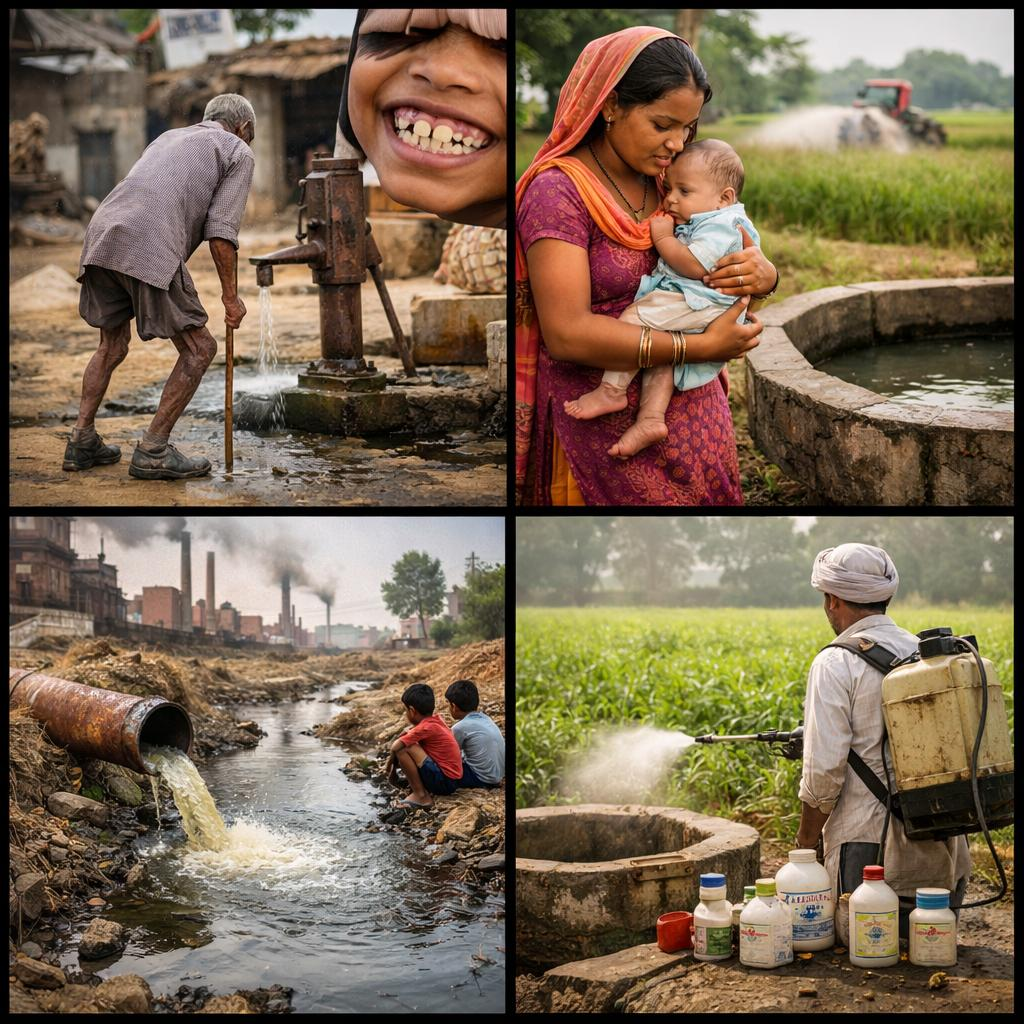
Over 60 million people across 20 states face fluoride contamination.
High fluoride causes:
• Dental fluorosis
• Skeletal fluorosis
• Bone deformities
Like arsenic, fluoride is invisible and tasteless in water.
Nitrates
Fertiliser runoff contaminates shallow wells across:
• Punjab
• Haryana
• Rajasthan
• Madhya Pradesh
High nitrate levels can cause:
Blue Baby Syndrome, a potentially fatal condition in infants where blood cannot carry oxygen properly.
Adults face increased risks of colorectal cancer with long-term exposure.
Heavy Metals
Near factories, tanneries, and mining zones, groundwater may contain:
• Lead
• Chromium
• Cadmium
Lead is especially dangerous for children.
Even small amounts can cause:
• Permanent brain damage
• Lower IQ
• Behavioural disorders
There is no safe level of lead exposure for children.
Pesticide Residues
India is one of the world’s largest pesticide users.
These chemicals can enter groundwater and disrupt:
• Hormones
• Fertility
• Child development
They also increase cancer risk.
- The Problem Nobody Talks About: RO Reject Water
Across Indian cities and towns, millions of families use RO water purifiers every day.
These machines are highly effective at removing contaminants from drinking water.
But they have a quiet, serious flaw.
🚰 The RO Reject Water Problem
For every:
1 litre of purified water
An RO system discards:
2 to 3 litres of reject water
This reject water contains concentrated contaminants — the same chemicals removed from your drinking water.
Typical Household Impact
Daily Waste: 20–40 litres
Monthly Waste: 600–1,200 litres
Yearly Waste: Up to 14,000 litres
That water flows into drains and eventually seeps back into the ground.
This creates a cycle of contamination.
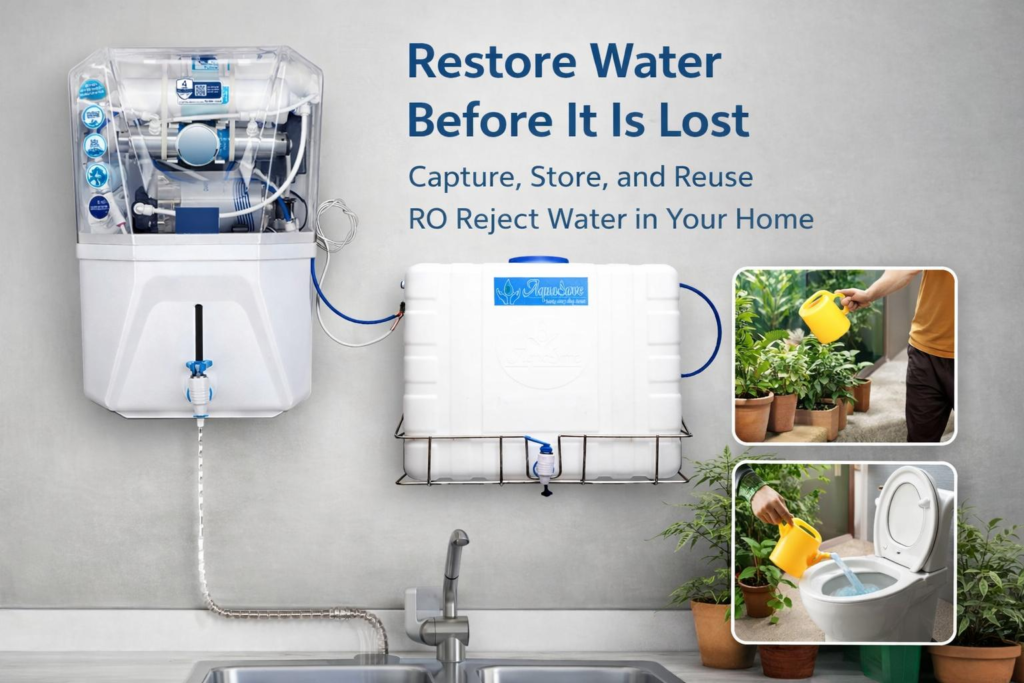
- AquaSave: Restore Water Before It Is Lost
“We help you store reject water from everyday home appliances.
We help you restore water before it contaminates.”
AquaSave is built around one simple idea:
The water your RO purifier rejects is not garbage.
It is usable water for:
• Washing
• Cleaning
• Flushing toilets
• Watering plants
• Household chores
Instead of letting that water drain away, AquaSave systems capture it and put it to productive use.
How It Works — Simply
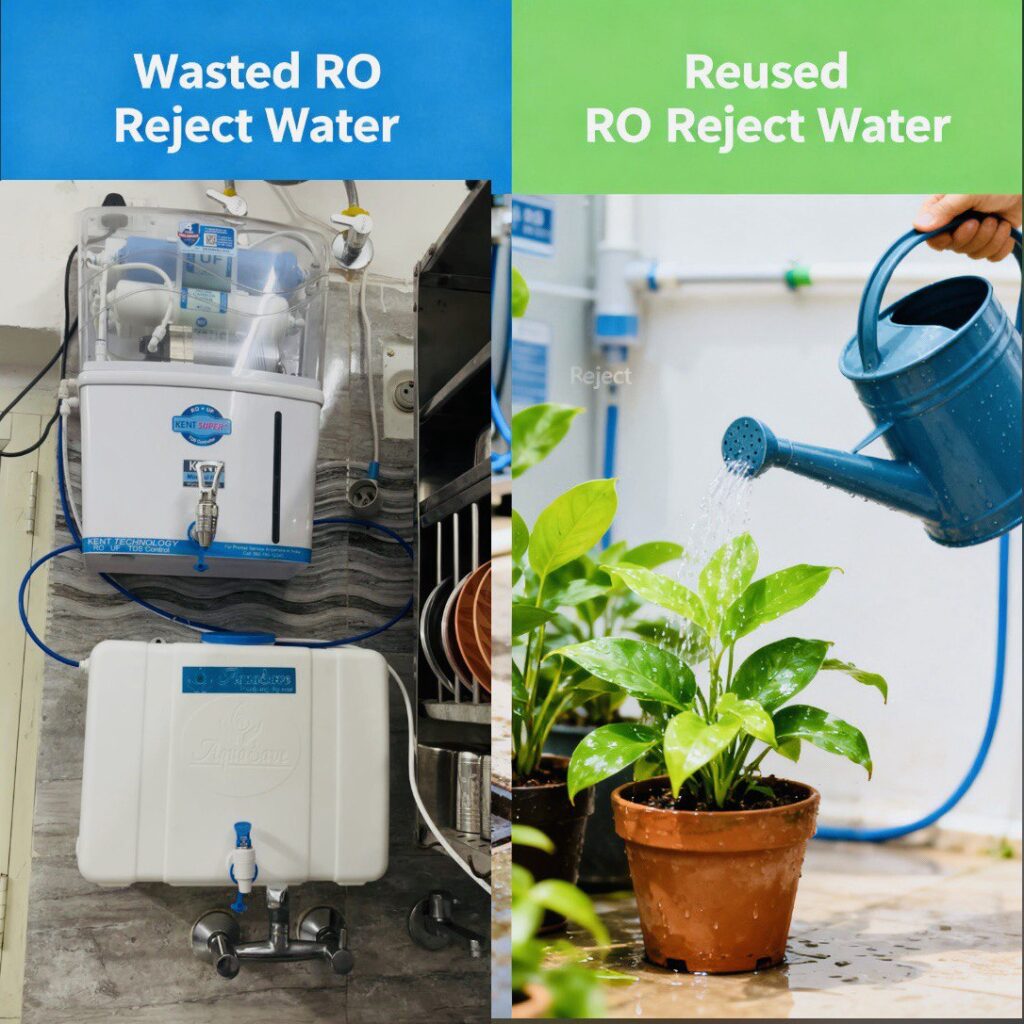
Without AquaSave
Your RO runs.
Reject water flows into the drain.
Contaminants return to the ground.
With AquaSave
Reject water is captured.
Stored safely.
Used inside your home.
What Can You Do With Stored Reject Water
You can use it for:
• Flushing toilets
• Mopping floors
• Watering plants
• Washing vehicles
• Cleaning utensils
• Outdoor cleaning
These activities do not require drinking-quality water.
🌱 Small Action. Real Impact.
A single household using AquaSave can save:
20–40 litres of water every day
That equals:
600–1,200 litres per month
7,000–14,000 litres per year
Across a housing society or community, the impact becomes enormous.
And unlike large infrastructure projects, this is something your family can do immediately.
- Fighting the Crisis: What Each of Us Can Do
Solving India’s water crisis starts at home.
At Home
• Test your water regularly
• Use certified water purifiers
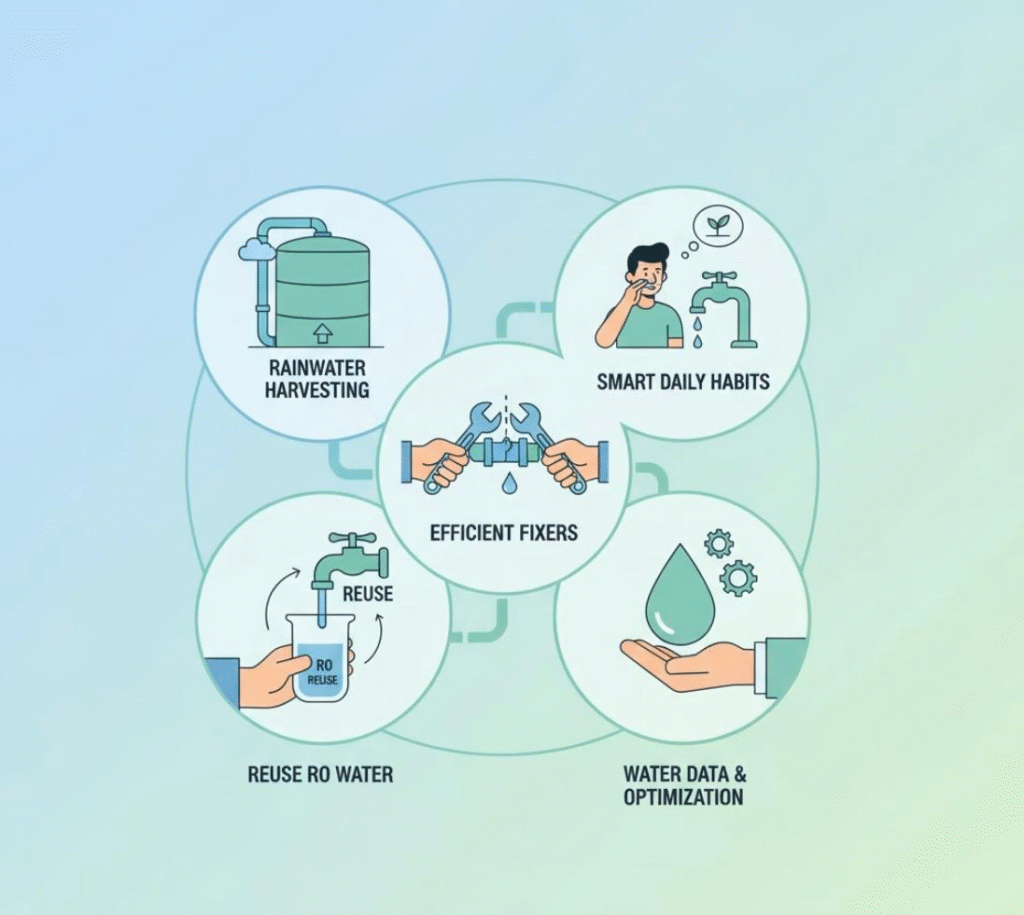
• Store and reuse reject water
• Fix leaking taps
• Reduce water waste
In Your Community
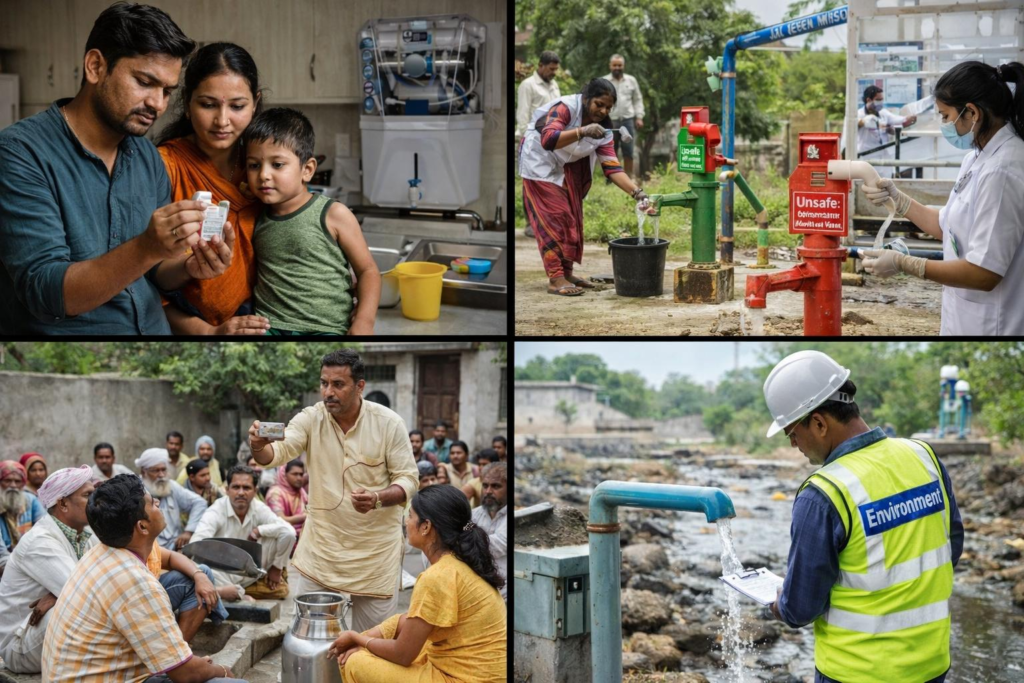
• Share awareness about water contamination
• Support water testing drives
• Encourage safe water labeling
From Government and Policy
• Mandatory water testing
• Stronger pollution control
• Groundwater protection policies
- Conclusion: Every Drop Is a Decision
India’s water crisis is invisible because the danger is invisible.
Water can look clear and still be unsafe.
But solutions exist.
And they start with small actions at home.
Testing water.
Reducing waste.
Reusing reject water.
When millions of households make simple changes, the impact becomes powerful.
✅ Start Today — Five Simple Steps
1. Test your drinking water
2. Maintain your RO purifier
3. Store reject water
4. Reuse water for household tasks
5. Spread awareness in your community.
Take the Next Step
If your home uses an RO purifier, the next step is simple.
Stop wasting water. Start reusing it.
Shop Now:
https://aquasave.in/product-category/aqua-save-ro/
Save water. Protect your home. Protect the future.