
Blog
What is Rooftop Rainwater Harvesting? Benefits, Process & Importance in India

What is Rooftop Rainwater Harvesting? Benefits, Process & Importance in India
Water scarcity is becoming a serious concern in India. With rising population, rapid urbanization, and unpredictable rainfall, many cities are already facing water shortages.
One simple and effective solution to this problem is rooftop rainwater harvesting. It is an easy and cost-effective method to collect and store rainwater for future use. This not only helps reduce water bills but also promotes sustainable living.
What is Rooftop Rainwater Harvesting?
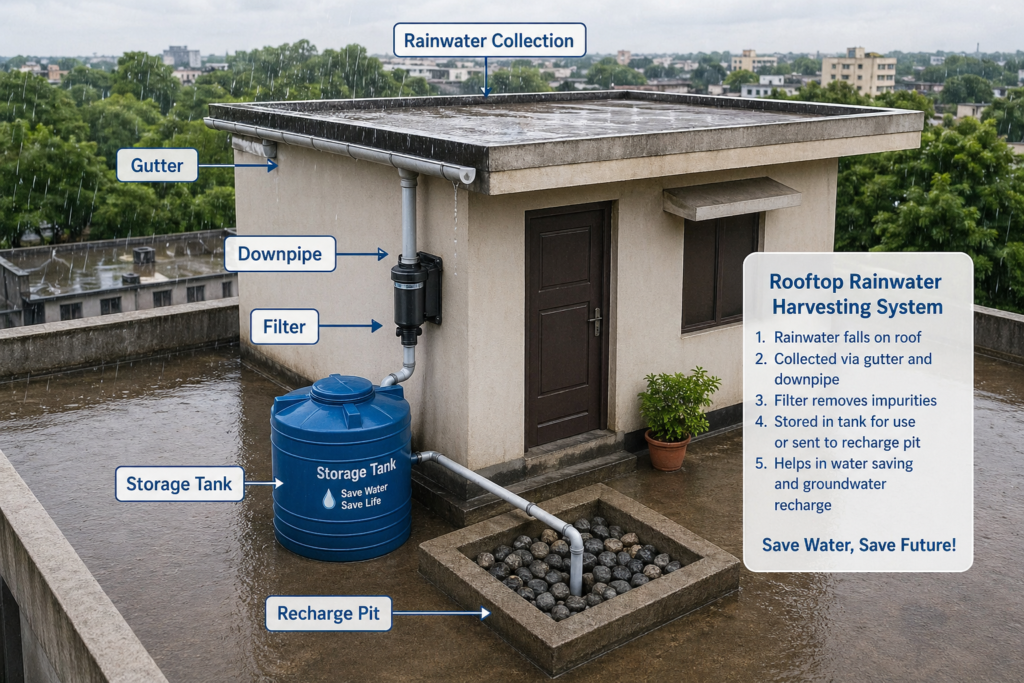
Rooftop rainwater harvesting is a method of collecting rainwater that falls on rooftops and storing it for later use or directing it to recharge groundwater.
Instead of letting rainwater flow into drains and go to waste, it is captured, filtered, and reused.
In simple terms:
👉 Your roof becomes a water collection system.
Why is Rooftop Rainwater Harvesting Important in India?
India is facing increasing water scarcity due to multiple factors like population growth, urbanization, and climate change. Many cities heavily depend on groundwater and water tankers.
Key reasons include:
Groundwater levels are falling rapidly
Water demand is increasing every year
Rainwater is often wasted
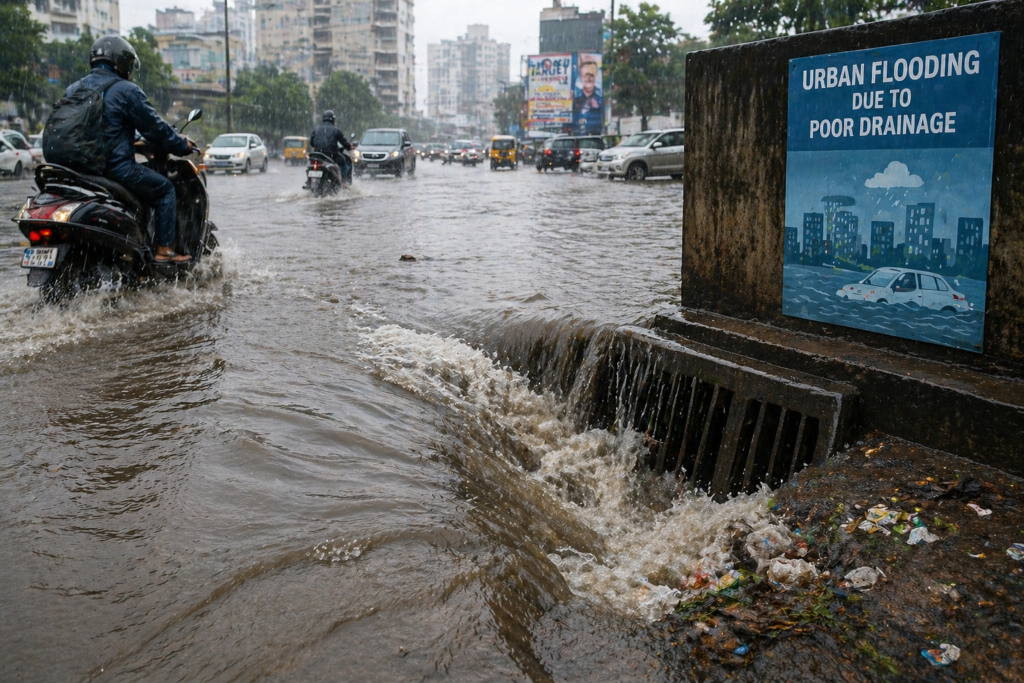
Urban flooding due to poor drainage systems
👉 Rooftop rainwater harvesting directly addresses these issues by conserving water at the source.
How Rooftop Rainwater Harvesting Works
The system is simple and can be installed in most homes.
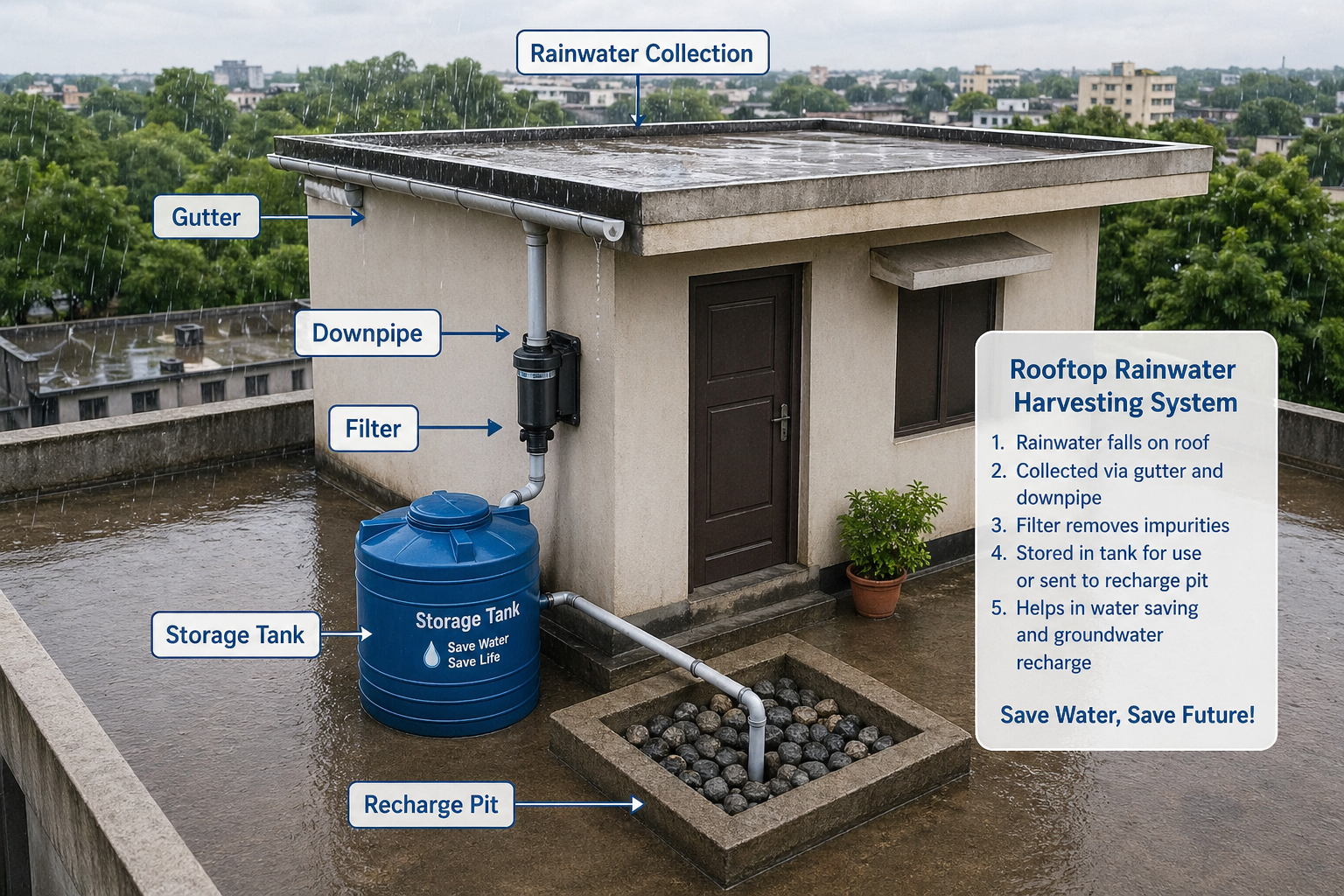
Basic Components
Catchment Area: Rooftop that collects rainwater
Gutters/Pipes: Carry water from roof to system
Filter Unit: Removes dirt, leaves, and debris
Storage Tank: Stores water for future use
Recharge Pit: Helps water seep into the ground
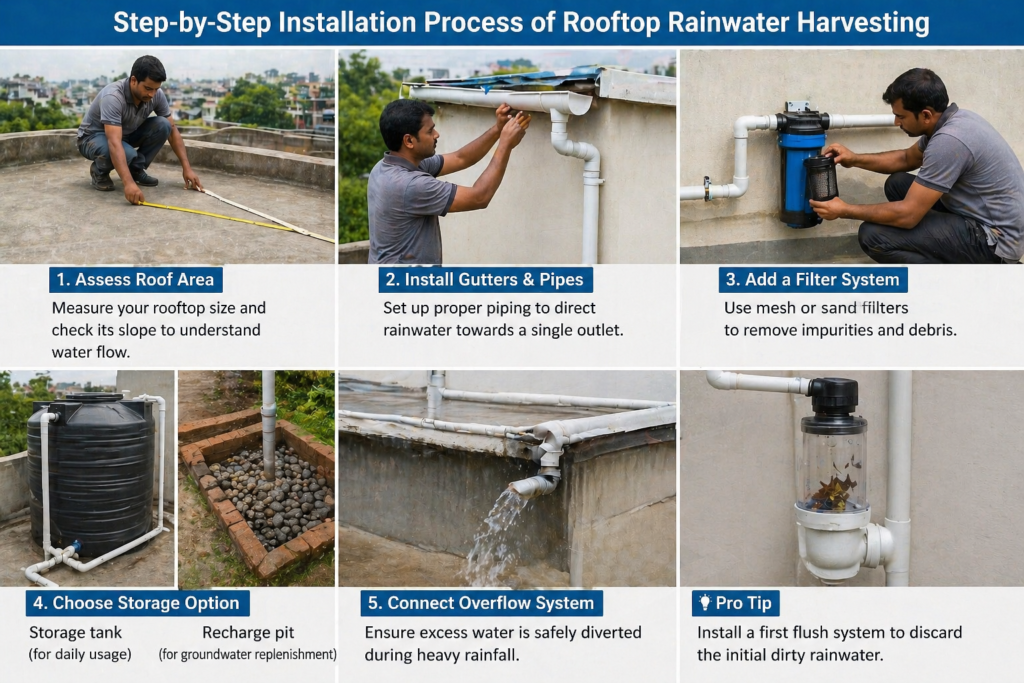
Step-by-Step Installation Process
1. Assess Roof Area
Measure your rooftop size and check its slope to understand water flow.
2. Install Gutters & Pipes
Set up proper piping to direct rainwater towards a single outlet.
3. Add a Filter System
Use mesh or sand filters to remove impurities and debris.
4. Choose Storage Option
Storage tank (for daily usage)
Recharge pit (for groundwater replenishment)
5. Connect Overflow System
Ensure excess water is safely diverted during heavy rainfall.
💡 Pro Tip: Install a first flush system to discard the initial dirty rainwater.
Benefits of Rooftop Rainwater Harvesting
1. Saves Water
Reduces dependence on municipal supply and water tankers.
2. Lowers Water Bills
Less purchased water means lower monthly expenses.
3. Recharges Groundwater
Helps improve groundwater levels in your area.
4. Eco-Friendly
Prevents water wastage and reduces urban flooding.
5. Easy to Maintain
Simple system with minimal maintenance required.
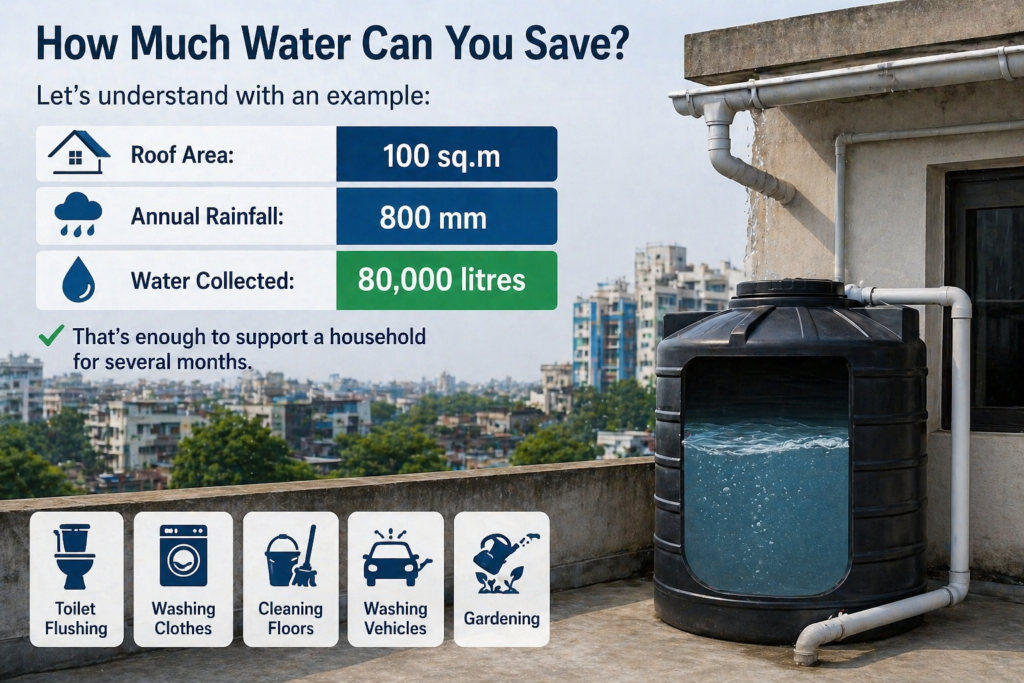
How Much Water Can You Save?
Let’s understand with an example:
Roof Area: 100 sq.m
Annual Rainfall: 800 mm
Water Collected: 80,000 litres
👉 That’s enough to support a household for several months.
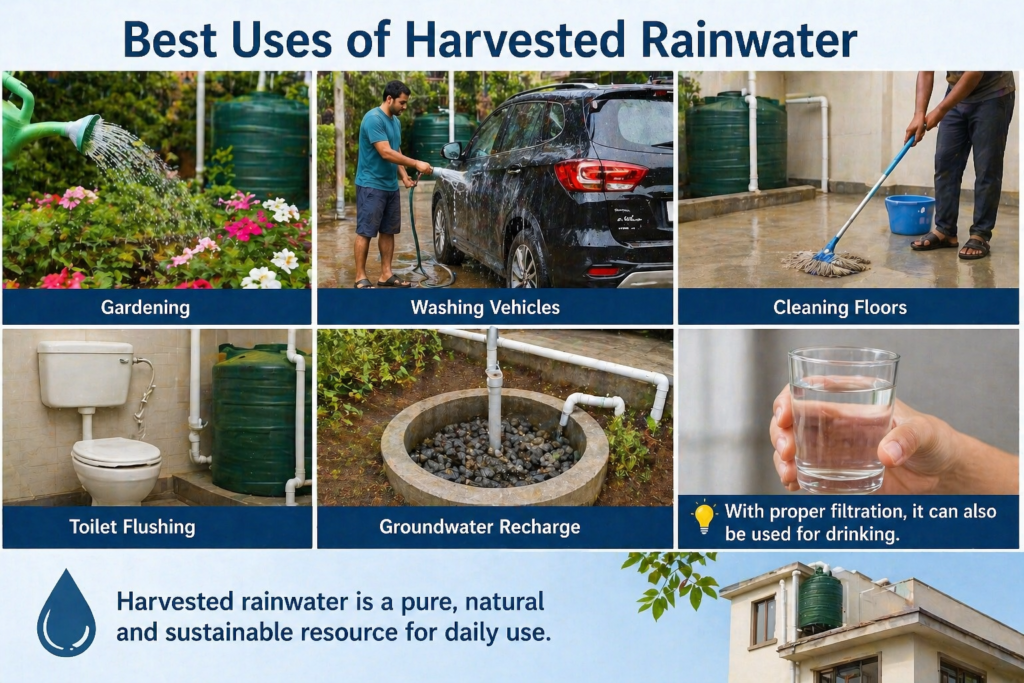
Best Uses of Harvested Rainwater
Gardening
Washing vehicles
Cleaning floors
Toilet flushing
Groundwater recharge
💡 With proper filtration, it can also be used for drinking.
Maintenance Tips
Clean roof and gutters regularly
Check filters before monsoon
Remove debris from pipes
Inspect storage tanks
👉 Regular maintenance ensures clean and safe water.
Conclusion
Rooftop rainwater harvesting is not just a good practice—it is becoming a necessity in India. It is affordable, easy to implement, and highly effective in conserving water.
By adopting this system, every household can contribute to solving the water crisis while also saving money.
🚀 Call to Action
Want to take your water-saving efforts further?
Explore smart water solutions and reduce water waste at home.
👉 Shop Now: https://aquasave.in/product-category/aqua-save-ro/
FAQs
1. Is rooftop rainwater harvesting expensive?
No, it is relatively low-cost and offers long-term savings.
2. Can harvested rainwater be used for drinking?
Yes, with proper filtration and purification.
3. Is it suitable for apartments?
Yes, it can be implemented in both independent homes and apartments.
4. How much maintenance is required?
Minimal—just periodic cleaning and inspection.
5. Does it work in low rainfall areas?
Yes, even small amounts of rainfall can be effectively collected and used.