
Blog
The Hidden Water Crisis at Home

The Hidden Water Crisis at Home
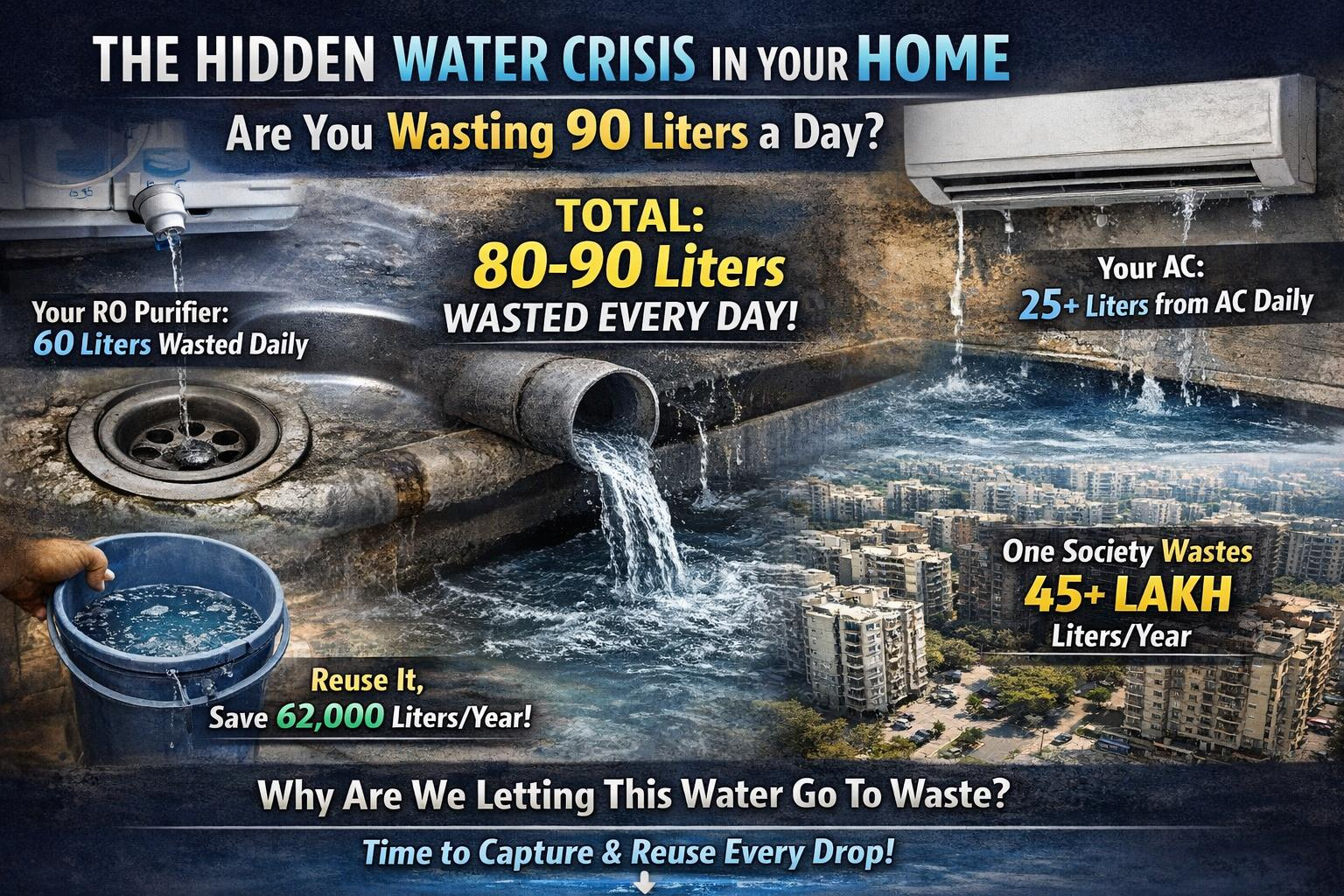
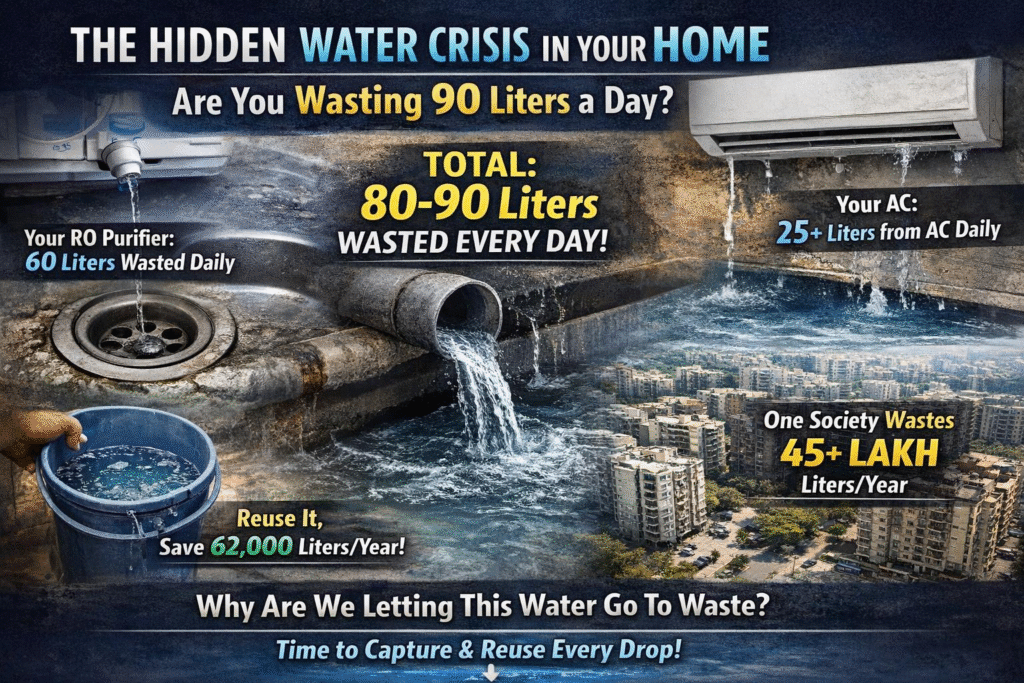
The hidden water crisis at home is not caused by long showers or open taps. It happens silently—every day—through appliances we trust.
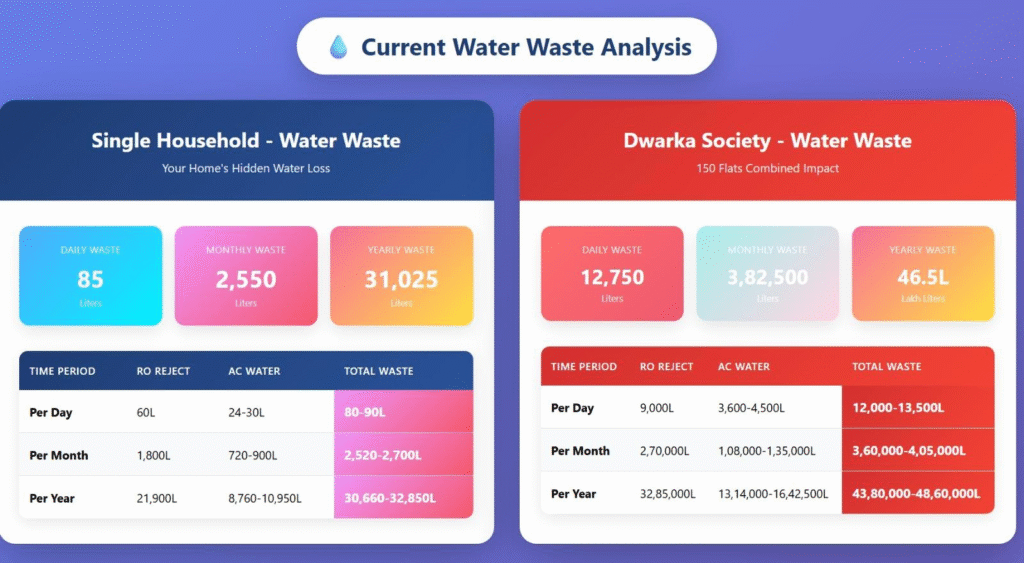
Most households unknowingly waste 80–90 liters of usable water daily. This water comes mainly from RO purifiers and air conditioners and goes straight into drains.
Over a year, this adds up to 30,000+ liters per home.
And the worst part? This water can easily be reused.
Understanding Invisible Water Waste
When we think about saving water, we focus on:
• Turning off taps
• Using buckets
• Shorter showers
But the biggest loss happens without visibility.
It happens behind walls, pipes, and machines.
Your home is quietly flushing clean water away—every single day.
RO Purifiers: The Silent Water Waster
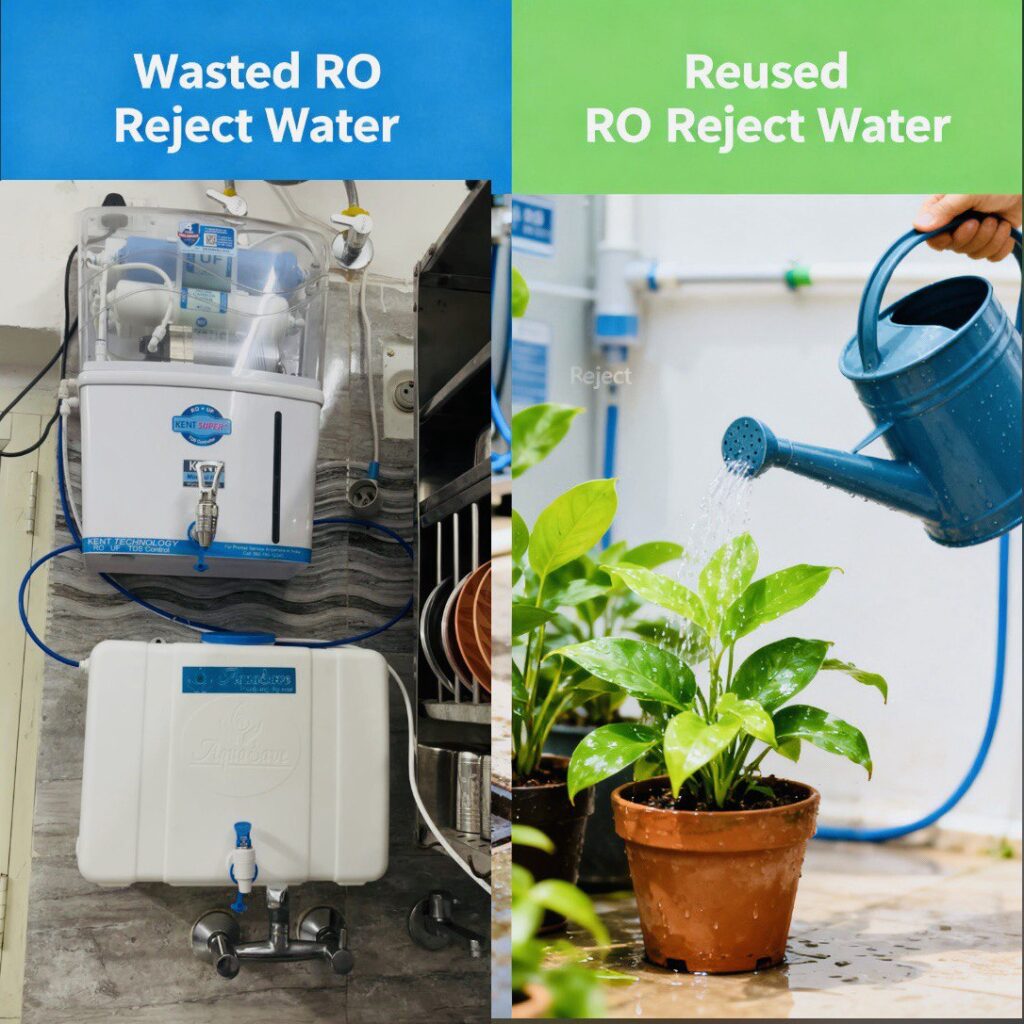
Your RO purifier is designed to remove impurities. But in doing so, it rejects large amounts of water.
Typical RO output
| Input water | Drinking Water | Reject Water |
| 90 Liter | 30 Liter | 60 Liter |
That means:
👉 For every 1 liter you drink, 2 liters are wasted.
Daily RO reject water: ~60 liters
This water is not dirty. It is only high in TDS and perfectly usable for cleaning and flushing.
Air Conditioners: Your Hidden Water Generator
Most people don’t realize this:
Every AC is a water generator.
It pulls moisture from air and converts it into water through condensation.
AC Water Output:
• 8 hours usage: 12–15 liters
• 16 hours usage: 24–30 liters
In many homes, this water flows directly into drains.
We praise atmospheric water generators, yet ignore the one already installed in our rooms.
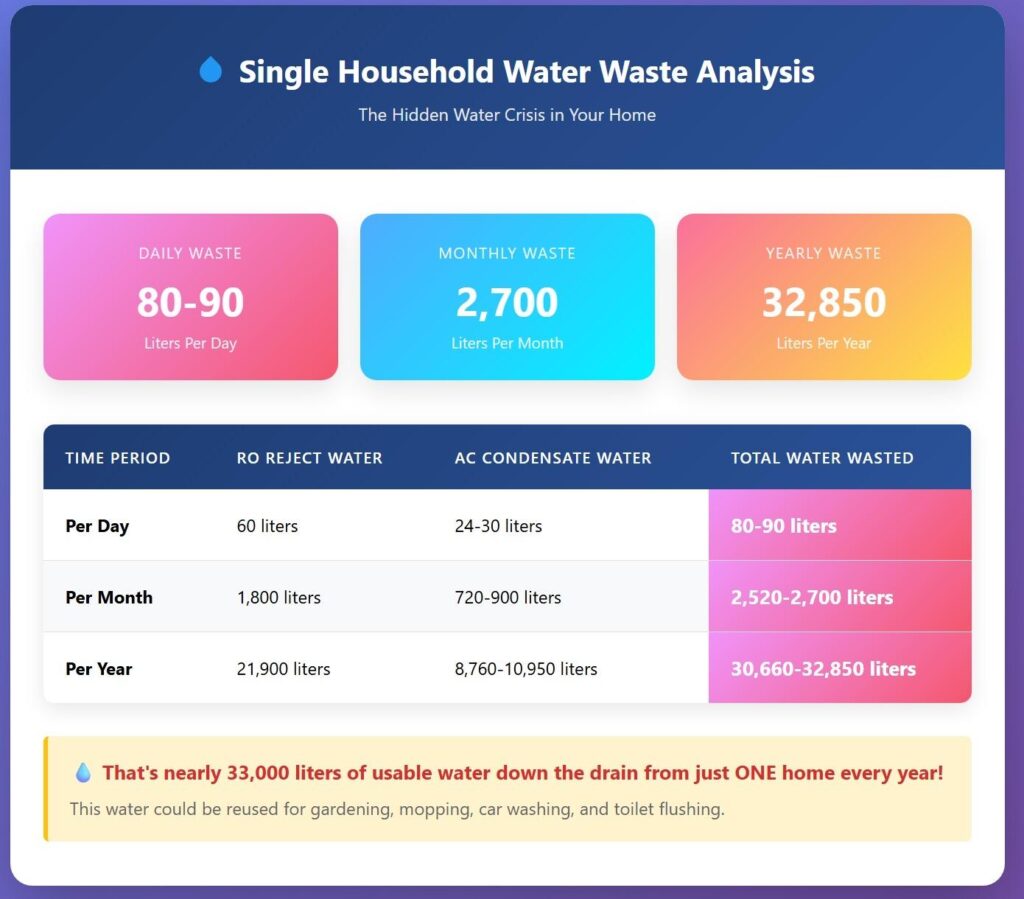
The Real Math Behind Daily Water Loss.
| Source | Daily Waste |
| RO System | -60L |
| AC Unit | 24-30L |
| Total | 80-90L |
Annual Impact
| Period | Water Wasted |
| Monthly | 2400-2700L |
| Yearly | 29,200-32,850L |
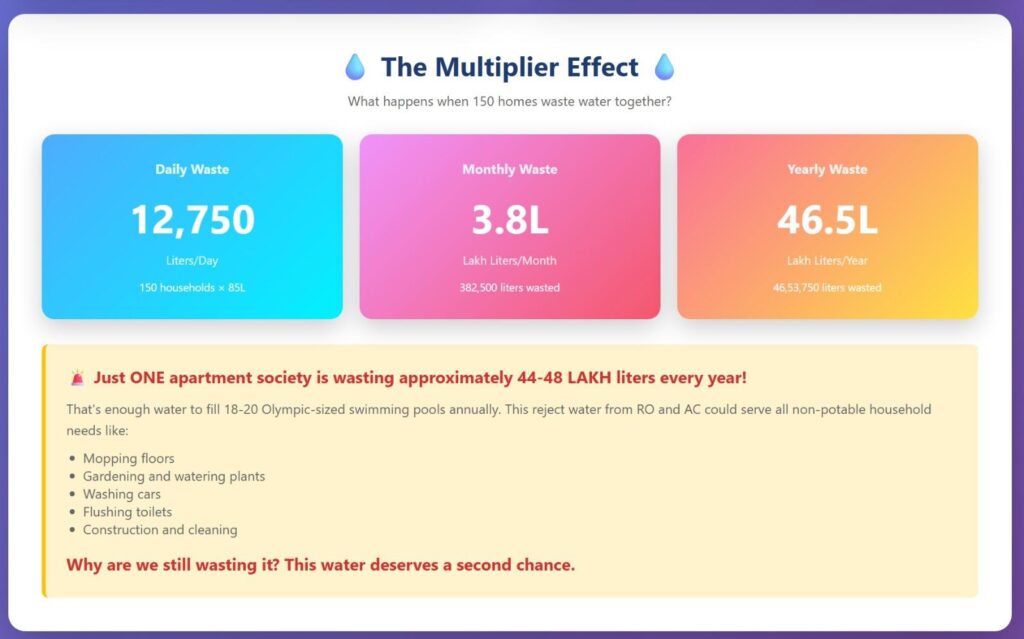
That’s nearly 30,000 liters every year from one home.
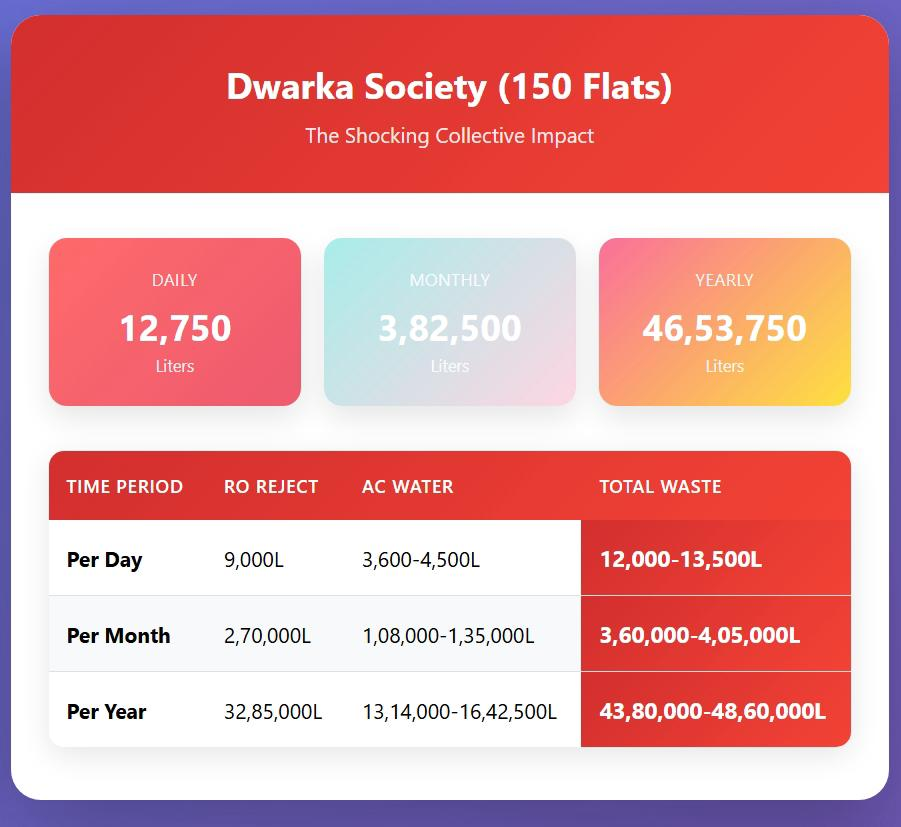
Case Study: Dwarka Housing Society
In a Dwarka apartment complex with 150 flats:
Daily Waste
• Minimum: 12,000 L
• Maximum: 13,500 L
Monthly Waste
• 3,60,000 – 4,05,000 L
Yearly Waste
• 43.8 – 48.6 lakh liters
👉 One society alone wastes 44–48 lakh liters annually.
Enough water to support thousands of families.
Why Reusing Water Saves Twice
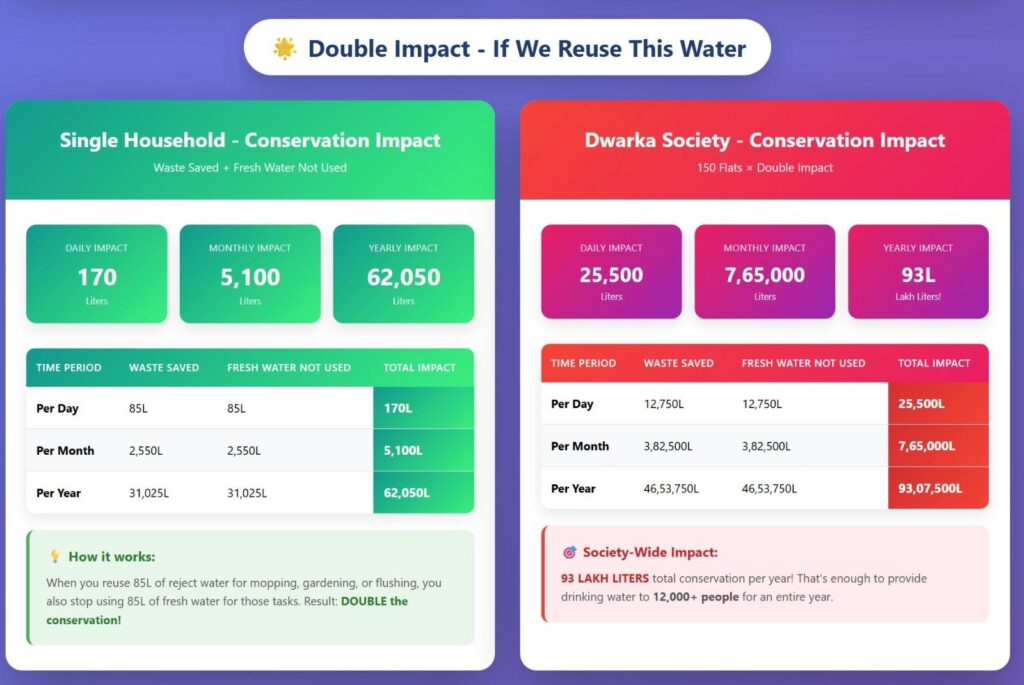
Reusing reject water creates double conservation impact.
How?
When you reuse 80 liters:
1. You save 80 liters of waste water
2. You stop using 80 liters of fresh water
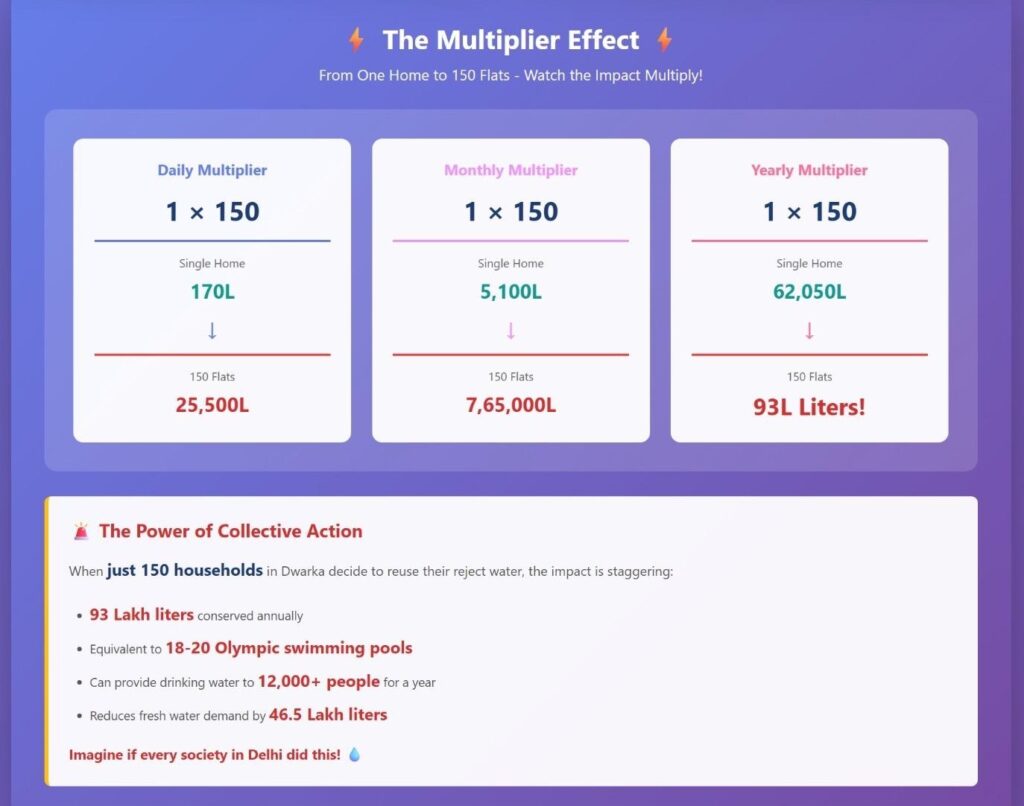
Result: 160 liters saved
| Level | Conseravtion |
| Home | 62,000L |
| Society | 93 Lakh L |
This is real climate action at home.
✅ Pro Tip:
Treat reject water as a resource, not waste. Store it separately and label it clearly.
Where Can This Water Be Used?
Reject water is ideal for:
• Mopping floors
• Gardening
• Car washing
• Toilet flushing
• Balcony cleaning
• Terrace washing
❌ Avoid for drinking or cooking.
How to Start Reusing Reject Water (Step-by-Step)
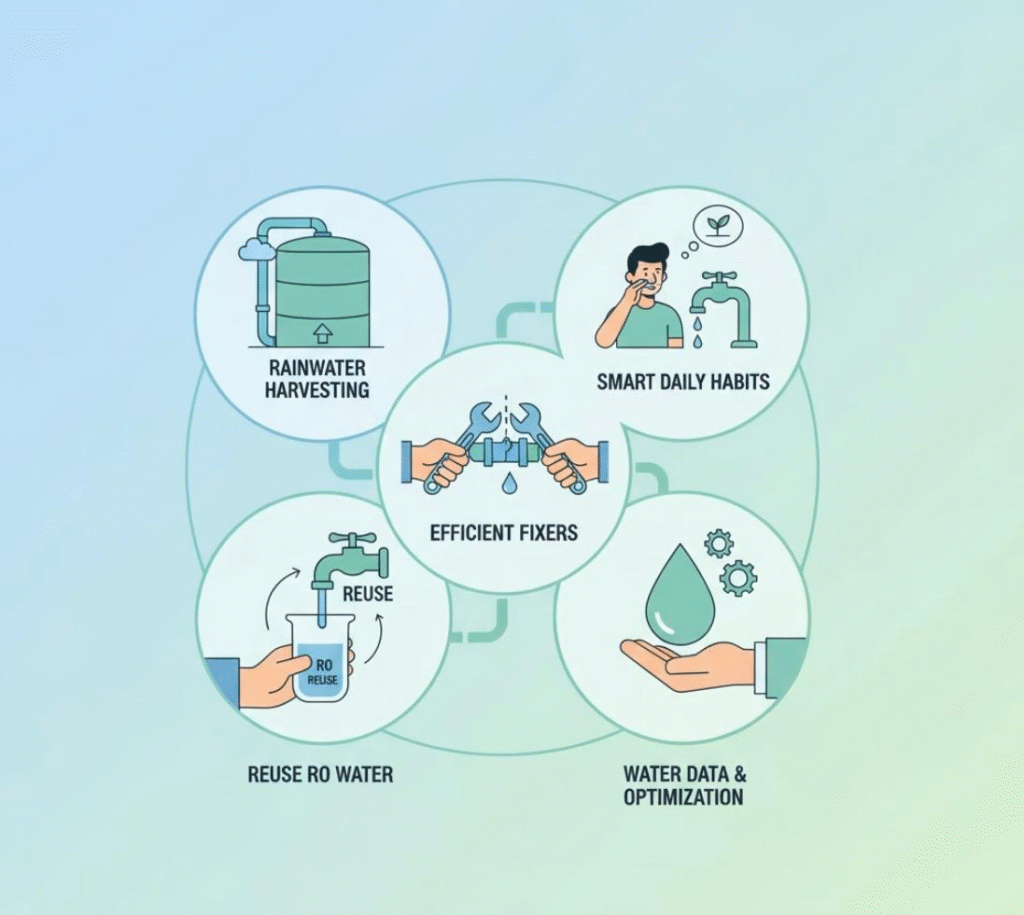
Step 1: Identify Sources
• RO outlet pipe
• AC drain pipe
Step 2: Install Collection System
• Storage tank
• Pipes
• Filter (optional)
Step 3: Connect Usage Points
• Toilet tank
• Garden tap
• Cleaning outlet
Step 4: Maintain System
• Clean tanks monthly
• Check for leaks
Step 5: Track Savings
• Monitor daily reuse
• Share results with society
Mini Checklist
☐ RO water redirected
☐ AC drain connected
☐ Storage installed
☐ Reuse points added
☐ Monthly cleaning
Why Are We Still Wasting It?
Despite awareness, wastage continues because:
• Lack of simple systems
• Low awareness
• No standard installations
• “Out of sight, out of mind” mindset
We value innovation but ignore easy solutions.
Conclusion: Giving Water a Second Life
The hidden water crisis at home is real.
Every day, your home loses 90 liters without notice.
But every day, you also have the power to stop it.
Reusing reject water is:
✔ Practical
✔ Affordable
✔ Scalable
✔ Impactful
At AquaSave, we believe every invisible drop matters.
It’s time to give wasted water a second life.
👉 What will you do with your 90 liters today?
Start your water-saving journey with AquaSave.
F) FAQ Section
- Is RO reject water safe for household use?
Yes, for non-drinking purposes like cleaning and flushing.
- Can AC water be used for plants?
Yes, it is usually low in minerals and suitable for most plants.
- How much does a reuse system cost?
Basic systems can start from a few thousand rupees.
- Does reuse require government permission?
Usually no, for internal household systems.
- How much water can I save annually?
Around 30,000–60,000 liters per household.